Manufacturing & ERP
Why Your Manufacturing Operations Are Bleeding Money And How ERP Fixes It
April 27, 2026
By April Wu With 6 years in ERP consulting and 50+ U.S. client engagements under her belt, April Wu knows what makes or breaks an implementation. As Founder & CEO of InSphere Consulting, she helps companies cut through the complexity and get their systems working for them.
Most manufacturing executives don't have a production problem. They have a visibility problem. And it's costing them in missed shipments, bloated inventory, compliance risk, and decisions made on data that's already 48 hours old by the time it lands on your desk.
At InSphere Consulting, we work with manufacturing companies at every stage of growth from single-site operations to multi-facility enterprises. Across every engagement, we see the same five operational pain points surfacing on the shop floor and in the boardroom. More importantly, we see how a properly implemented ERP resolves each one.
If you're a CEO, COO, or CFO in manufacturing, this post is written for you.
1. No Real-Time Visibility Across the Floor
When a VP of Operations has to wait until end-of-day reports to know whether production is on schedule, the business is already behind. Disconnected systems, legacy MES, siloed spreadsheets, manual work orders mean that leadership is always managing the past, not the present.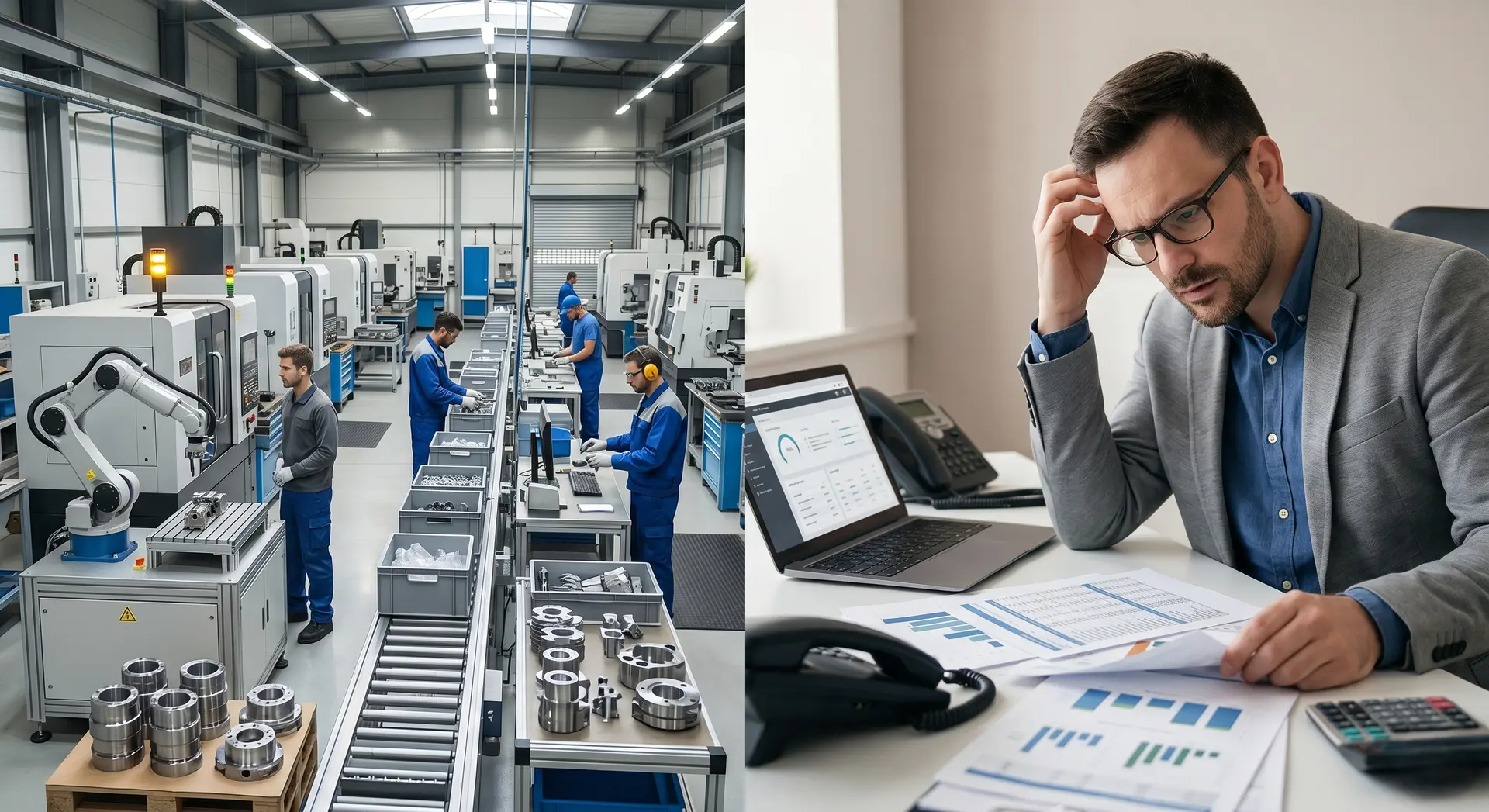
The Problem
Production bottlenecks, machine downtime, and yield losses go undetected until they've already damaged a customer delivery window or a quarterly margin. Studies show that manufacturers relying on delayed reporting lose critical response time, with downtime costing an average of $260,000 per hour when issues go undetected.
The ERP Fix
A manufacturing ERP with shop floor control gives operators and executives live dashboards showing work order status, machine utilization, and WIP inventory all updated as transactions occur. When a line slows down at 10 AM, your operations team knows at 10 AM, not at 5 PM. Real-time shop floor monitoring systems integrated with ERP enable manufacturers to identify bottlenecks and machine issues as they occur, shifting from reactive to proactive production management.
2. Inventory That's Either Too Much or Not Enough
Excess raw material ties up capital. Stockouts shut down production lines. Both erode margin. The root cause is almost always the same: demand planning done in spreadsheets, with no live connection between sales orders, purchasing, and the warehouse.

The Problem
Your purchasing team is ordering on gut feel or outdated reports. Your CFO is watching cash trapped in slow-moving inventory while operations is expediting rush orders to cover shortfalls paying premium freight both ways.
The ERP Fix
ERP-native Material Requirements Planning (MRP) calculates what to order, in what quantity, and when based on actual demand signals, lead times, and safety stock rules. When a sales order comes in, procurement is automatically informed. When inventory drops below reorder points, the system acts before a human has to notice. Research shows that properly implemented MRP systems reduce inventory costs by an average of 21% while improving production efficiency by 15%. NetSuite's manufacturing ERP provides real-time material planning that automatically adjusts based on demand signals.
Get Your Free Odoo Implementation Checklist
3. Quality Escapes That Reach Customers
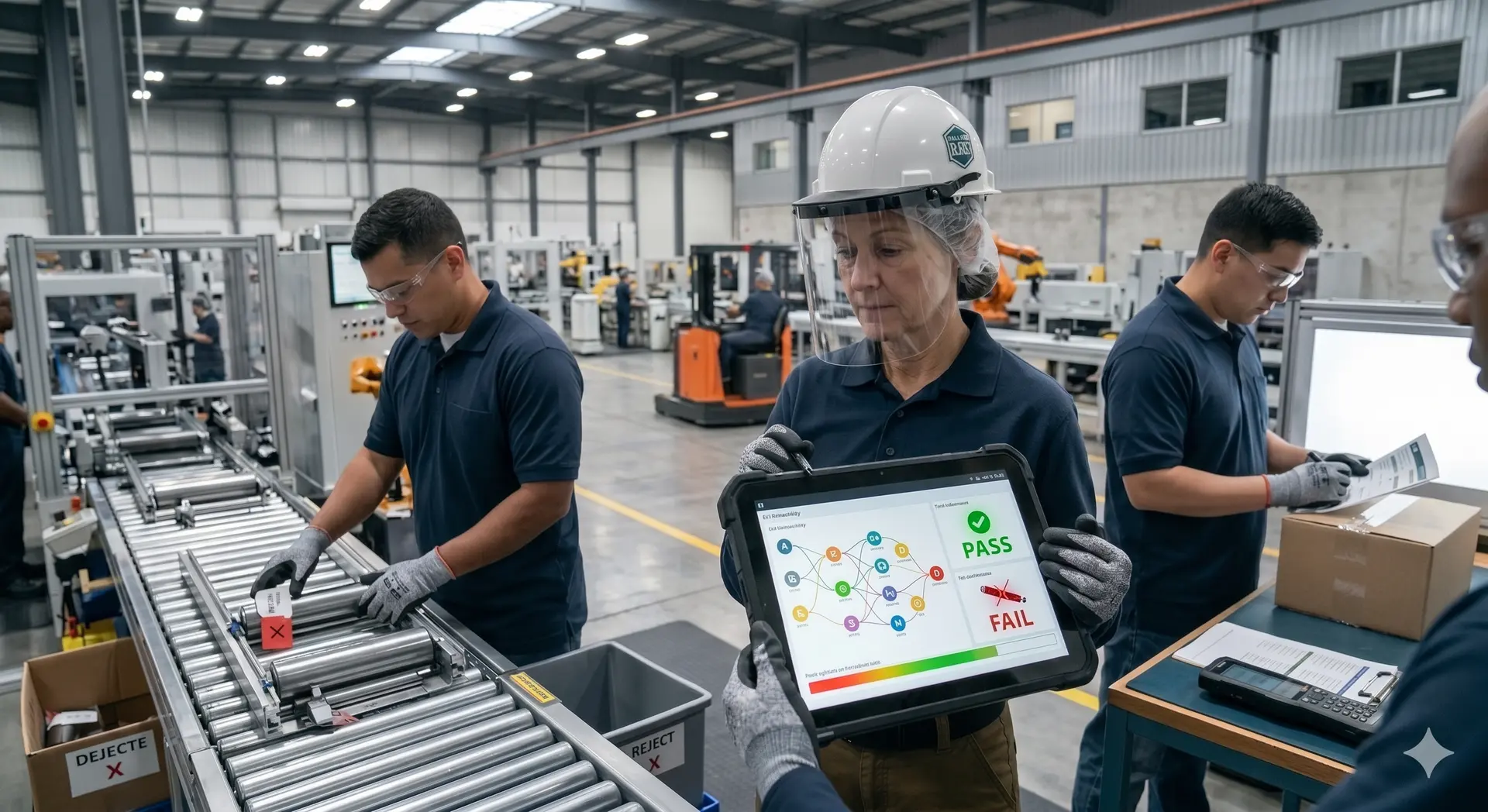
A single quality escape from a defective component shipped to a Tier-1 automotive supplier, a failed lot in a food-grade run can cost more in recalls, fines, and reputation damage than an entire year of operational savings. And in regulated industries, manual quality tracking is a liability, not a process.
The Problem
Industry research indicates that the cost of poor quality typically runs 5-25% of sales in manufacturing, with direct recall costs averaging $10 million per event for manufacturers. Inspection data lives in binders or standalone QMS tools that aren't connected to production records. Non-conformances are tracked reactively. Lot traceability takes hours to reconstruct during an audit.
The ERP Fix
Modern ERP platforms embed quality checkpoints directly into production workflows. Inspection results are recorded against specific work orders and lot numbers. Non-conformance reports are triggered automatically, and full genealogy from raw material receipt to finished goods shipment is traceable in seconds, not hours.
4. Finance and Operations Speaking Different Languages
One of the most expensive inefficiencies in manufacturing isn't on the shop floor, it's in the gap between operations and finance. When production costs are calculated in one system, inventory valued in another, and actuals reconciled in spreadsheets, month-end becomes a multi-week forensics exercise.

The Problem
Your CFO can't get accurate cost-of-goods data without waiting on the ops team. Standard costing variances are discovered weeks after the fact, when it's too late to adjust. Gross margin reporting is unreliable enough that executives discount it.
The ERP Fix
When manufacturing and financials share a single platform, actual material consumption and labor hours post directly to the general ledger as production occurs. Standard vs. actual cost variances surface in real time. Your CFO has the numbers the same day your production team does and they both trust the source. ERP integration between finance and operations eliminates data silos and provides instant access to operational data, while cloud ERP platforms can cut month-end close time in half through automated workflows and real-time financial reporting.
5. Scaling Without Breaking
Adding a new product line, onboarding a second facility, or entering a new distribution channel should be a growth milestone not a systems crisis. For manufacturers still running on legacy platforms, each expansion exposes how fragile the underlying infrastructure really is.
The Problem
Customizations built on aging ERP systems are costly to maintain and harder to extend. Each new location adds another data silo. IT becomes a bottleneck to every strategic initiative.
The ERP Fix
Cloud-based ERP platforms like NetSuite and Odoo are built to scale without re-platforming. Adding a warehouse location, a new currency, or a subsidiary is a configuration exercise not a six-month IT project. You grow the business; the ERP grows with it. NetSuite's manufacturing ERP and Odoo's manufacturing features offer specialized capabilities for production planning, quality control, and multi-facility operations that scale with business growth.
The Real Question Is Timing
The manufacturers we work with don't regret implementing ERP. They regret waiting. Every quarter spent managing operations on disconnected systems is a quarter of margin leak, missed intelligence, and compounding technical debt. Real-world ERP implementation case studies consistently show that manufacturers who delay implementation continue to experience margin leakage and operational inefficiencies that compound over time.
The right ERP configured correctly for how you actually manufacture, not for how the software vendor assumes you do is one of the highest-ROI investments a manufacturing executive can make. But that outcome depends entirely on implementation quality, change management, and whether the system is built around your processes rather than around a generic template.
That's exactly what InSphere does. We don't hand you a license and a user manual. We start with your production floor, your supply chain, and your financial close process and we build an ERP that reflects how your business works, with the visibility and control your leadership team needs to make faster, better decisions.
Ready to find your gaps? Book a System Health Check with InSphere Consulting, and we'll show you exactly where the field-to-finance disconnect is showing up and what it's likely costing your bottom line.