Mastering the Mix: Bridging the Shop-Floor-to-Finance Gap for Make-to-Order Manufacturers
In the "New Normal" of 2026, manufacturing leaders share one clear mandate: make performance predictable. In the high-stakes world of Make-to-Order (MTO) manufacturing, that is no small task. Unlike stock-based environments, MTO production starts only after an order is received, enabling deep customization and reducing inventory risk, as outlined in leading make-to-order manufacturing models. Every job becomes a unique project with its own BOM, specialized labor, and volatile lead times, a pattern reinforced in modern MTO guides for manufacturers.
This model offers real strategic upside. MTO can reduce waste, lower the risk of inventory obsolescence, and increase competitiveness through personalized products that closely fit customer requirements, a theme echoed in several complete guides to MTO manufacturing. It is especially prevalent in customized products, luxury goods, and high-value machinery, where precision and fit matter more than speed alone.
The tradeoff is that work begins after order confirmation, so MTO operations often face longer lead times and higher per-unit costs than mass production. For many growth-focused manufacturers, the constraint isn’t just a CNC machine or welding station, it's the information gap between the shop floor and the finance office. When operational data and financial reporting live in separate worlds, you aren’t running a business; you’re managing a string of expensive surprises.
The Airport Control Tower Analogy
Imagine running a major international airport without a control tower. The shop floor is your runway. Custom orders (planes) are constantly landing and taking off, each requiring specific materials (fuel), a specialized crew (labor), and a precise time window (scheduling). Without a central source of truth, the ground crew doesn’t know what the gate agents are promising, and accounting doesn’t know what was actually consumed until month-end.
“Shop-Floor-to-Finance” integration acts as that control tower. It provides real-time visibility so what is built in the plant is accurately reflected in revenue recognition and margins, mirroring the outcomes described in shop floor integration with ERP and MES and advanced shop floor integrations for modern ERPs.

The Cost of the Disconnect: A Risk-Mitigation Narrative
Many manufacturers that have outgrown entry-level accounting tools operate in a reactive state, relying on tribal knowledge and spreadsheets to track job progress.
Manual tracking creates “invisible” shop floor costs that silently erode margins. Recent research and case studies on MTO operations show the same pattern, as summarized in 2026-focused MTO industry analyses:
- 59% of MTO leaders cite inventory and material bottlenecks as their primary growth inhibitor.
- 46% of executives struggle with scheduling predictability, leading to missed delivery dates and strained customer relationships.
Without shop-floor-to-finance cohesion, you experience “Margin Creep”: actual material costs or overtime hours surface weeks after invoicing. In an era of high material costs and labor scarcity, that delay is dangerous. Manufacturers that have implemented robust shop floor management software connected to ERP consistently report improved costing accuracy and fewer surprises.
Solving the "Invisible" Shop Floor
To scale confidently, you must align physical production with your digital ledger. That means capturing data at the source and eliminating manual handoffs, a principle emphasized in modern MTO software best-practice guides.
1. Assess Your Current Data Integrity
Can your finance team see the exact status of a work order without calling the production manager? If not, you have a visibility gap. Successful Odoo and NetSuite projects start with “clean data migration” and clear master data ownership. Without accurate historical data, your forecasts and predictive analytics will be fundamentally flawed a key theme in MTO implementation and optimization articles.
2. Identify the Bottlenecks
Inventory in MTO is a balancing act. You cannot afford capital tied up in “just-in-case” stock, but a single missing component can stall a six-figure job. Modern ERP for SMB and mid-market manufacturers automates replenishment based on real-time BOM requirements, ensuring materials arrive when labor and machines are scheduled, much like the approaches described in MTO inventory optimization and supply coordination resources.
This is where lean manufacturing and just-in-time (JIT) scheduling become essential. In MTO environments, lean principles remove non-value-added steps, while JIT synchronizes purchasing, labor, and machine time with actual demand. The result is a tighter link between operations and finance: less idle inventory, fewer rush purchases, cleaner job costing, and stronger margin visibility fully aligned with lean/JIT guidance in MTO operations best-practice guides and modern MTO handbooks.
With Odoo or NetSuite, manufacturers can connect sales orders, BOMs, procurement, work orders, and financial reporting in one system. The plant schedules against real demand, while finance gains real-time clarity into WIP, material consumption, labor absorption, and job-level profitability echoing the end-to-end visibility.
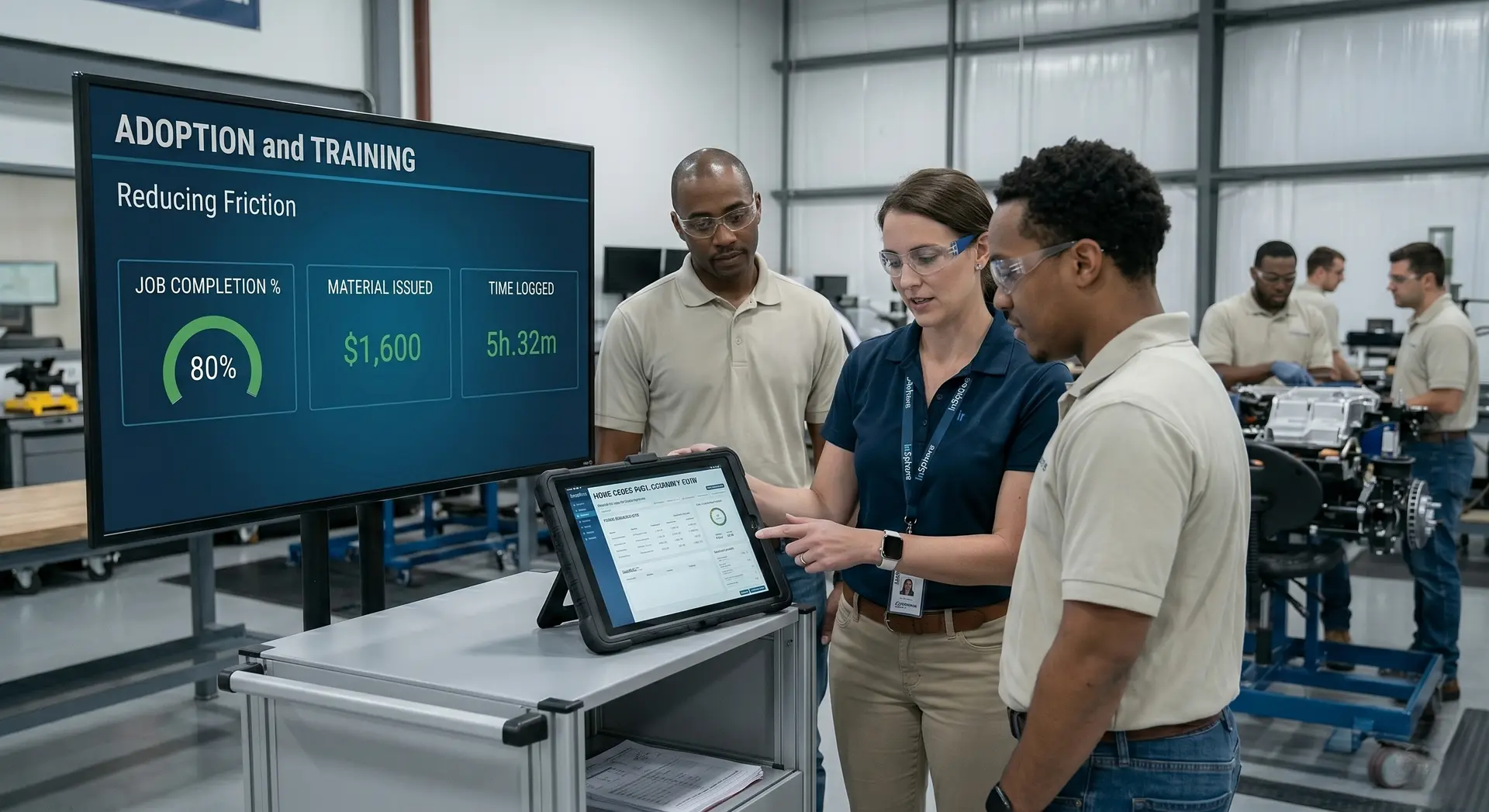
3. Consider the Human Element: Adoption and Training
The most sophisticated system fails if the people using it find it confusing or threatening. At InSphere Consulting, we prioritize execution and adoption over feature lists. We build custom dashboards that show each role only what they need, reducing friction and improving data quality from the first transaction.
Effective ERP implementation requires a white-glove approach to training and solution design. The goal is to make accurate, timely data capture the natural outcome of how your teams work.
Odoo vs. NetSuite: Navigating Your Options
Platform choice is a strategic decision that shapes your total cost of ownership and operational flexibility. As experts in both ecosystems, we provide a grounded view of how Odoo and NetSuite serve the MTO sector.
From the InSphere perspective:
- Odoo often suits growth-focused manufacturers that need high flexibility, heavy customization, and rapid iteration on workflows.
- NetSuite tends to fit firms with complex financial compliance requirements, multi-entity structures, or more advanced reporting needs.
You can explore our Odoo consulting services or our NetSuite implementation expertise to see which aligns with your 2026 roadmap. Both approaches are in line with how leading MTO software platforms frame the importance of integrating sales, production, and finance in one environment.
The InSphere "White-Glove" Methodology
We don't just install software; we act as strategic advisors who understand the reality of your shop floor. Our process is designed to avoid the common failure modes of ERP projects.
- Requirements Gathering: Deep analysis of your BOM structures, routing logic, and costing assumptions.
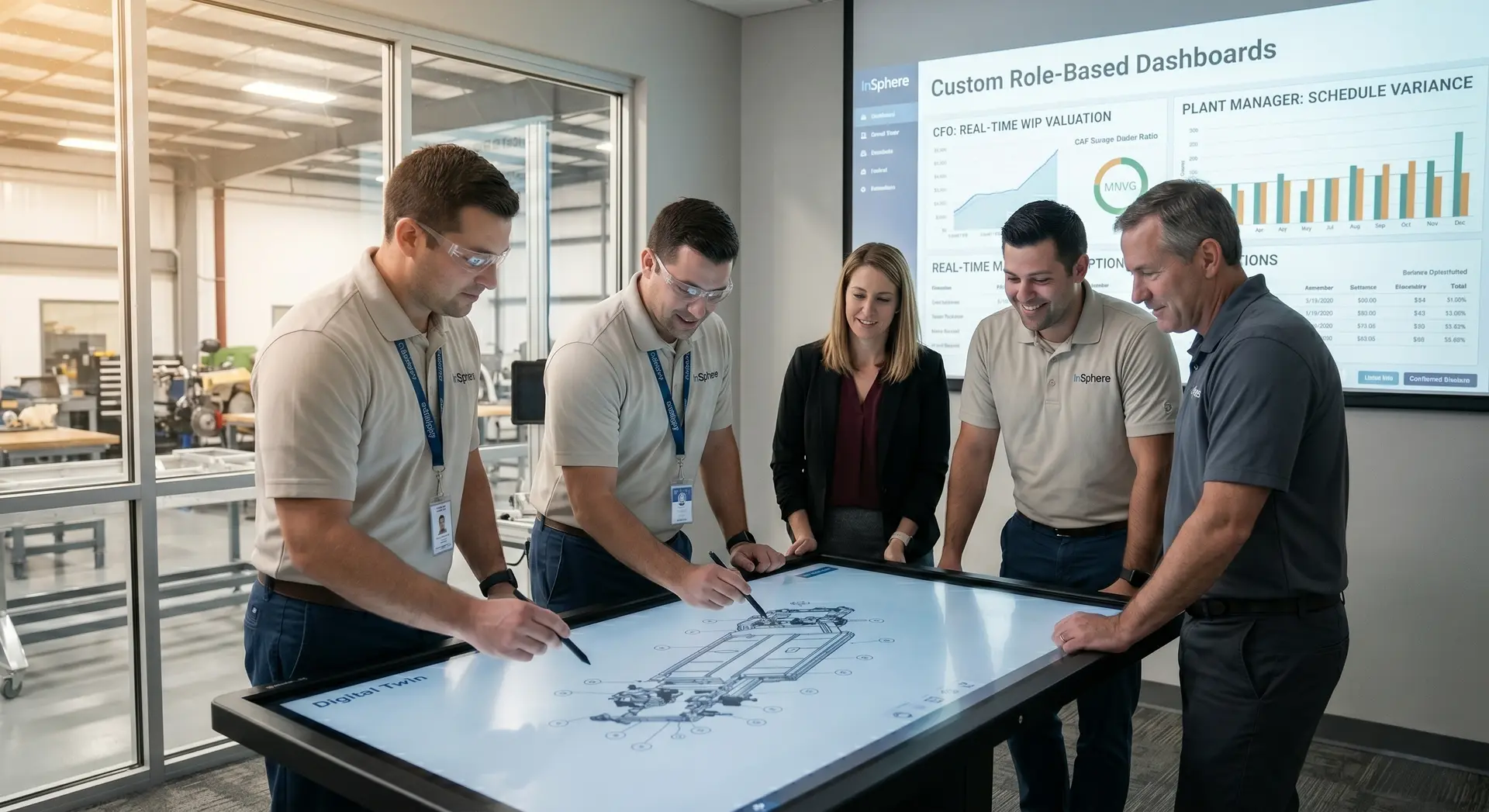
- Solution Design: Building a “digital twin” of your production process within the ERP.
- Process Optimization: Streamlining and standardizing workflows before they are automated.
- Custom Dashboards: Delivering real-time, role-based insights for both the CFO and the Plant Manager.
The outcome is not just a new system, but a new level of operational precision that supports sustainable growth.
Future-Proofing Your Operations
Looking toward the rest of 2026 and beyond, the manufacturers that win will treat data as a core asset, not an afterthought. Visibility is no longer just “knowing where an order is”; it is knowing how much profit that order is generating while it’s still on the floor.
For MTO manufacturers, the future belongs to companies that balance customization with control. The goal is not to copy mass production, but to create a system where custom demand triggers an efficient, repeatable response backed by lean execution, JIT scheduling, and accurate financial reporting.
By bridging the gap between operations and finance with Odoo or NetSuite, you move from firefighting to proactive, data-driven leadership. You gain the clarity to make confident decisions about capacity, pricing, lead times, and capital investment. Real-time visibility into job costing and revenue trends gives you the leverage to set strategy, not just react.
Take the Next Step Toward Clarity
If your current system feels more like a hurdle than a springboard, you’re not alone. Most manufacturers underestimate how much “noise” is in their data until they see what a clean, integrated environment looks like.
We invite you to experience a no-pressure System Health Check. We’ll review your workflows, surface hidden bottlenecks, and outline a practical roadmap to true shop-floor-to-finance integration.
Book Your Strategy Session with InSphere Consulting Today
Precision. Transparency. Care. Flexibility. Join the 100% of our clients who have found a long-term partner in InSphere.