By InSphere Consulting, CPA-Led ERP (Enterprise Resource Planning) Advisory, Implementation and Risk Mitigation
February 2026
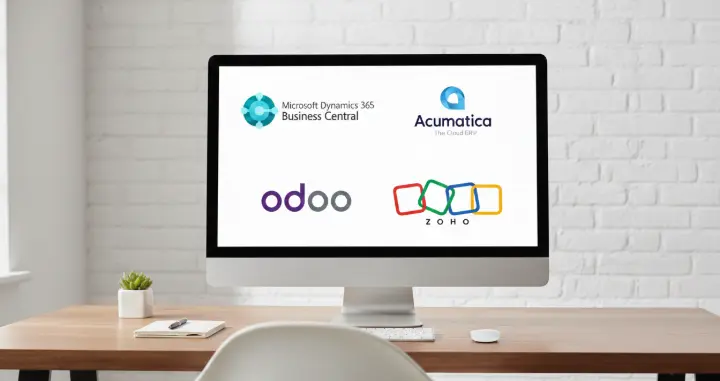
ERP system interest among businesses with $0.5M–$20M in revenue has exploded. Modular ERP platforms, AI-driven ERP, and the pressing need to eliminate spreadsheet chaos have driven this surge. Yet the statistics remain sobering: Gartner forecasts that more than 70% of recently implemented ERP initiatives will fail to fully meet original business goals by 2027, with up to 25% resulting in catastrophic ERP failure. Panorama Consulting’s 2025 ERP Report indicates an ERP implementation failure rate of 68% industry-wide climbing to 73% in discrete manufacturing often accompanied by ERP budget overruns exceeding 200%.
The root cause is rarely the cloud ERP software itself. It’s ERP execution misalignment, particularly in business operational and system process design alignment, organizational change management, data structure design and migration, implementation scope and fee structure alignment, and financial and compliance needs and expectation handling.
Entering 2026, software has been widely used and adopted by small and medium-sized businesses, and inevitably, a lot of businesses were rushed or forced into software adoption without the proper planning or guidance (because all of their peers are using one, or more). What truly leads to successful software adoption, especially ERP software solutions, is disciplined ERP project execution, from discovery to design, from planning to user training, from data migration to reporting accuracy. That is the key to turning your system into a time-saving and revenue-boosting asset rather than an expensive financial burden.
The 2026 SMB ERP Landscape: A Strategic Shortlist

For growing companies in field service, wholesale distribution, construction, and light manufacturing industries, five key players consistently make it to the finalist of ERP selection:
Odoo ERP: This is InSphere Consulting’s favorite product and the InSphere team uses Odoo internally.
- Strengths: Modular, app-based, open-source and options of SaaS, shared hosting, and private hosting version; enables flexible, cost-effective growth across all departments of a business.
- Limitations: Customization complexity, which could also lead to maintenance difficulties without expert ERP guiding and leading.
- Average 5-year ERP Total Cost of Ownership (TCO): $40K–$150K
Zoho One:
- Strengths: Rapid SaaS ERP deployment with unified CRM and light operations capabilities. It’s ideal for small service or agency teams needing quick wins.
- Limitations: Inventory management and finance depth become limited at scale.
- Average 5-year ERP Total Cost of Ownership (TCO): $50K–$110K
Microsoft Dynamics 365 Business Central:
- Strengths: Finance-first ERP with native Microsoft 365 and Power BI integration. It’s a natural choice for Microsoft-centric firms with regulatory compliance needs.
- Limitations: The learning curve is steeper, and ERP partner quality is critical.
- Average 5-year ERP Total Cost of Ownership (TCO): $85K–$200K.
Acumatica:
- Strengths: Unlimited user ERP models and cloud-native scalability for operations-heavy teams. It excels in construction ERP and high-headcount distribution growth scenarios.
- Limitations: ERP implementation planning intensity is the main risk.
- Average 5-year ERP Total Cost of Ownership (TCO): $110K–$240K.
Niche Industry-specific Tools:
- Strengths: Strong user adoption as the tools are already tailored to industry-specific needs and functionalities.
- Limitations: The industry-specific tools (like Jobber, ServiceTitan, or FieldEdge, taking field service industry as an example) normally don’t come with accounting functions, causing businesses to either give up on a strong accounting foundation or adopt endless integration data-flow issues and maintenance.
- Average 5-year ERP Total Cost of Ownership (TCO): $110K–$240K.
ERP Quick Comparison: Key Platforms by Industry
Platform | Field Services (HVAC, Plumbing, Landscaping) | Wholesale Distribution | Construction and Projects |
Odoo | Pros: Real-time parts tracking to GL; unifies field ops and accounting Cons: Customizations are often needed on top of the out-of box features | Pros: Strong inventory management/barcode feature; modular and very affordable Cons: High-volume operations need optimization for landed costs | Pros: Solid unification of job costing and project management Cons: Expert setup required for accurate billing and compliance |
Zoho One | Pros: Fast setup and good scheduling for small teams Cons: Weak finance and inventory depth beyond ~$2M scale | Pros: Quick, low-cost entry with basic integration Cons: Lacks depth for complex SKUs and landed costs | Pros: Good CRM/ops bridge for small projects Cons: Insufficient job costing and billing depth at growth stage |
Microsoft Dynamics 365 BC | Pros: Strong finance features, audit trails, and Microsoft ecosystem integration Cons: Steeper learning curve; partner quality is critical | Pros: Excellent compliance, margin reporting, and Power BI insights Cons: Implementation complexities and cost | Pros: Reliable job costing, BI visibility, and strong compliance |
Acumatica | Pros: Unlimited users for scaling field crews; cloud-native for ops-heavy teams Cons: Heavy upfront design and planning required | Pros: Best scaling for SKUs, landed costs, and high-volume teams Cons: Rigorous implementation process | Pros: Unlimited users; excellent for large crews and project growth |
Industry Pain Points & How Leading Platforms (Especially Odoo) Address Them
Field Service Industries: Landscaping, Pool, HVAC and Plumbing Services
The core problems the businesses are facing are disconnected information and data sharing between back-office and field crew: many businesses have reported issues of unbilled labor, mismatches in parts usage, and dispatch/scheduling gaps. This often leads to 10–20% hidden revenue loss and ongoing reconciliation headaches which could demotivate back-office staff members.
Odoo performs strongly when system processes are designed to align with business operational processes. It has out-of-box features like real-time parts usage tracking, which flows directly into inventory management and inventory/cost/margin tracking.
Niche field service tools like Jobber, ServiceTitan, or FieldEdge excel in scheduling and user interface but frequently fracture accounting integrity once annual revenue exceeds $2 million, causing businesses to either give up on a strong accounting foundation or adopt endless integration data-flow issues and maintenance.
Wholesale Distribution
The core problems the businesses are facing are high-volume SKU management, landed costs tracking and allocation, inventory, accounting, and costing reconciliation complexities, hidden cost overruns, and distorted margins.
Odoo manages barcode scanning and inventory management effectively, though requiring user data input accuracy, especially for high-volume operations.
Acumatica scales well with its unlimited-user model, supporting ops-heavy teams.
Construction and Project-Driven Businesses
The core problems the businesses are facing are inaccurate job costing, progress billing drift, and concealed cost overruns often remain hidden until project closeout triggering quarterly shocks and contributing to high failure rates.
Odoo unifies project management and accounting for better linkage.
Niche construction tools like Procore handle workflows exceptionally well but introduce sync issues with core accounting functions.
Get your Odoo Implementation checklist here
Why 70%+ Software Platform Implementation Still Fail in 2026, and How to Close the Execution Gap
Even with SaaS acceleration and AI assistants, failure rates of software implementation and user adoption did not drop. Panorama’s 2025 data shows timelines averaging about 9 months thanks to cloud tools, but success still depends on alignment.
Common failure drivers include financial workflows added late (creating perpetual reconciliation debt), underestimating change management (resulting in low adoption and shadow systems), and partner mismatches (either coders who overlook ledgers or accountants uncomfortable with configuration).
InSphere closes this gap with our proprietary methodology built on six pillars:

InSphere Consulting adopted a business trusted-advisor approach in ERP implementations, which is combined with strong ERP solutions like Odoo. The implementation and software features together enable growing small and medium-sized businesses to “have it all”. We design the system flows to match business operational flows, which is documented after in-depth discovery with every key role of the business. In addition, the comprehensive user training, extensive user acceptance testing led by the InSphere team, and the accurate data mapping and validation process, establishes a high (so far 100%) on-time go-live and successful go-live rate.
We achieved the 100% on-time and successful go-live rate through our six pillars:
- Accounting-First Architecture - Solution needs to “make accounting sense” first.
- CPAs Who Code - Dual-credential consultants ensure solution efficiency and functional accuracy.
- 10+ Years Senior Expertise - The industry knowledge and experience lead to best-practice design and solution.
- Risk-First Roadmap - We try to mitigate risks that jeopardize the targeted go-live timeline.
- Cross-Departmental Alignment - We bridge buy-in for C-suites, accounting, and all other departments.
100% On-Time, Full-Retention Record - We chase after our customers hard, and we work overtime to catch up when customers slack.
Final 2026 Perspective: Choose Wisely, But Execute Ruthlessly
The platform decision Odoo vs. Acumatica vs. Dynamics BC vs. Zoho matters, but it accounts for only about 25% of success. Execution drives the remaining 75%.
In an era where so many great software options with advanced features are available, the true differentiator is no longer features alone. It’s whether your implementation partner is the trusted advisor for you, your team, and your business from Day 1.
If you’re planning for ERP implementation in 2026 and want to be part of the 25% successful stories, we invite you to start with our Strategic ERP Risk and Readiness Audit. In a 20-minute executive briefing, we’ll evaluate your current pain points and demonstrate exactly how the right architecture changes the outcome. We promise you will not feel any sales pressure and will find value through this process.
[Schedule Your 2026 ERP Risk Audit / Get your Odoo Implementation checklist here ]
InSphere Consulting: White-glove, CPA-led ERP advisory for growing businesses ready to scale with confidence.